Reading the Kunsthaus Across Heimplatz
Zurich’s art museum is one institution in two main buildings, Karl Moser’s of 1910 and David Chipperfield’s of 2021, joined by a passage under the square.
The Kunsthaus Zürich is one museum in two main buildings facing each other across Heimplatz. The useful thing to know is which side holds what.
The older side began as Karl Moser’s building, opened on 17 April 1910. The museum’s own history records that Moser extended it in 1925, that the Pfister brothers’ large exhibition gallery, auditorium and restaurant opened in 1958, financed by Emil G. Bührle, and that Erwin Müller’s extension followed in 1976. David Chipperfield Architects, who won the competition in 2008, count four buildings from different eras. Their freestanding addition on the north side of the square opened in autumn 2021.
How the two halves connect
A visitor passage runs under Heimplatz; the City of Zurich puts it at more than seventy metres. The museum’s floor plan places it on the lower ground floor, labelled with Ólafur Eliasson and the cloakrooms. A printed map is available at the ticket desk on either side.
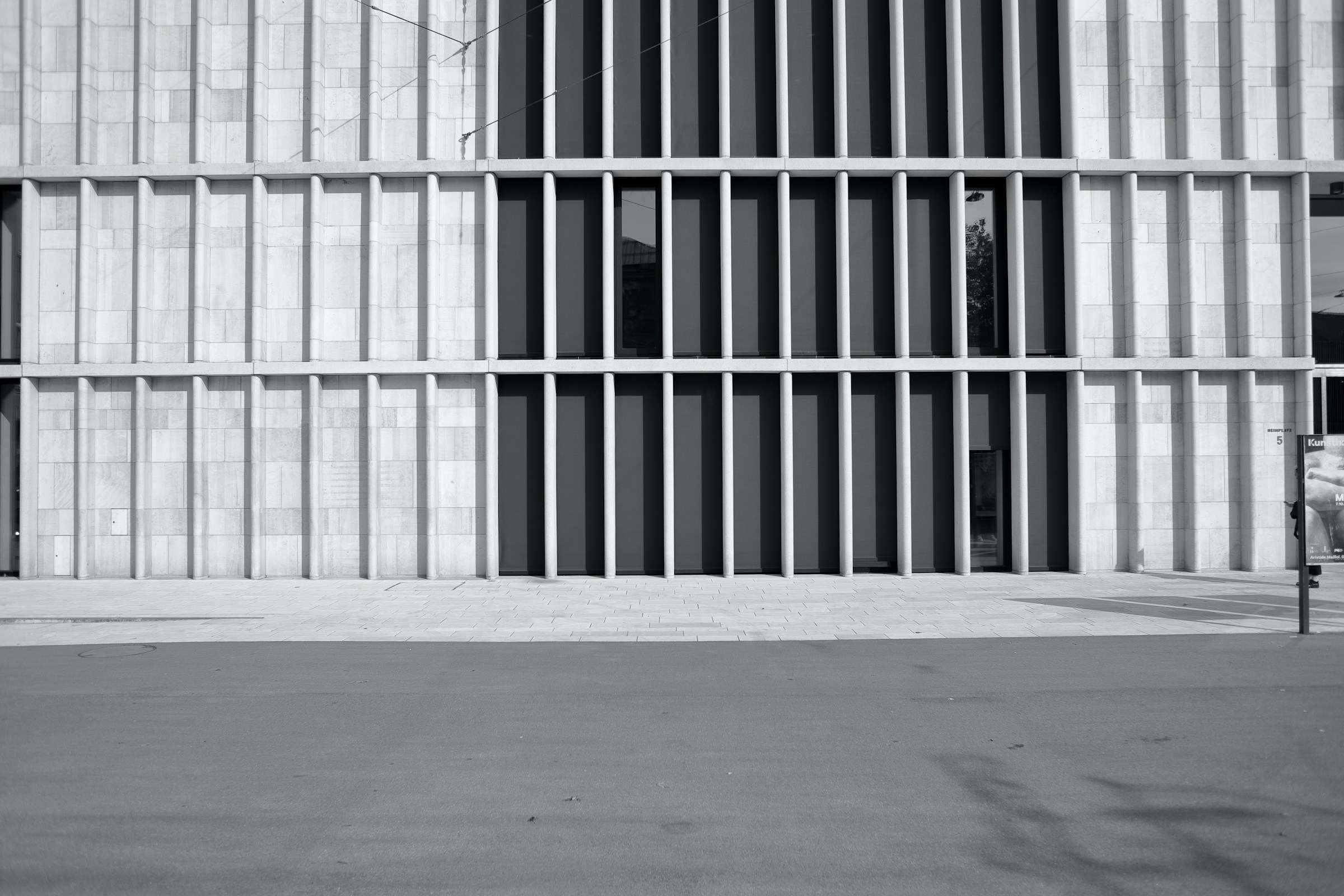
Chipperfield’s practice calls the new building a “house of rooms”. The entrance hall runs the full length of the building, from the square to the Garden of Art behind it, with the bar, shop and event hall arranged around it. The upper floors are for art only: side light on the first, skylights on the second. The facade is a rhythm of slender fins in Jurassic limestone, modelled on stone fronts such as the older Kunsthaus.
What the Moser side holds
The current floor plan keeps the older collection here. The first upper floor runs from Swiss and German late Gothic masters through Italian painting from 1300 to 1800, including El Greco and Canaletto, to Dutch seventeenth-century painting, Swiss painting of the eighteenth and nineteenth centuries and a room of Hodler figures. The second upper floor moves from Füssli and Angelika Kauffmann through Delacroix, Courbet, Manet and Degas to Bonnard, Gauguin, Vuillard, Munch and the Expressionists. Temporary exhibitions also use this building.
What the Chipperfield side holds
The architects give the brief as classical modernism, the Bührle collection, temporary exhibitions and art from 1960 onward. The first floor now holds Impressionism, Dada, Surrealism, Abstract Expressionism with Rothko and Twombly, art after 1945 and after 1980, and two private collections on loan: Gabriele and Werner Merzbacher’s and Hubert Looser’s. The second floor holds Alberto Giacometti and the Bührle rooms.
The Bührle rooms
The museum states that the 205 works belong to the Foundation E. G. Bührle Collection, have been on long-term loan since 2021 and were not donated. The loan agreement requires them, in principle, to be shown together in the Chipperfield building. Since 10 April 2026 an interim display, “In transition”, has hung the loan densely in salon style, beside an archive section on the collection’s exhibition history and reception. Works lent elsewhere, or under negotiation between the foundation and the legal successors of earlier owners, are marked by an empty space on the wall and a label standing in for the work. A five-year provenance research project began on 1 April 2026, and the museum says a new main presentation is planned for 2027/2028. The museum’s online questions and answers give the fuller account.
A practical order follows the dates: start at Moser, cross underground, finish upstairs at Chipperfield. The museum says admission to the collection is free for everyone on Wednesdays.